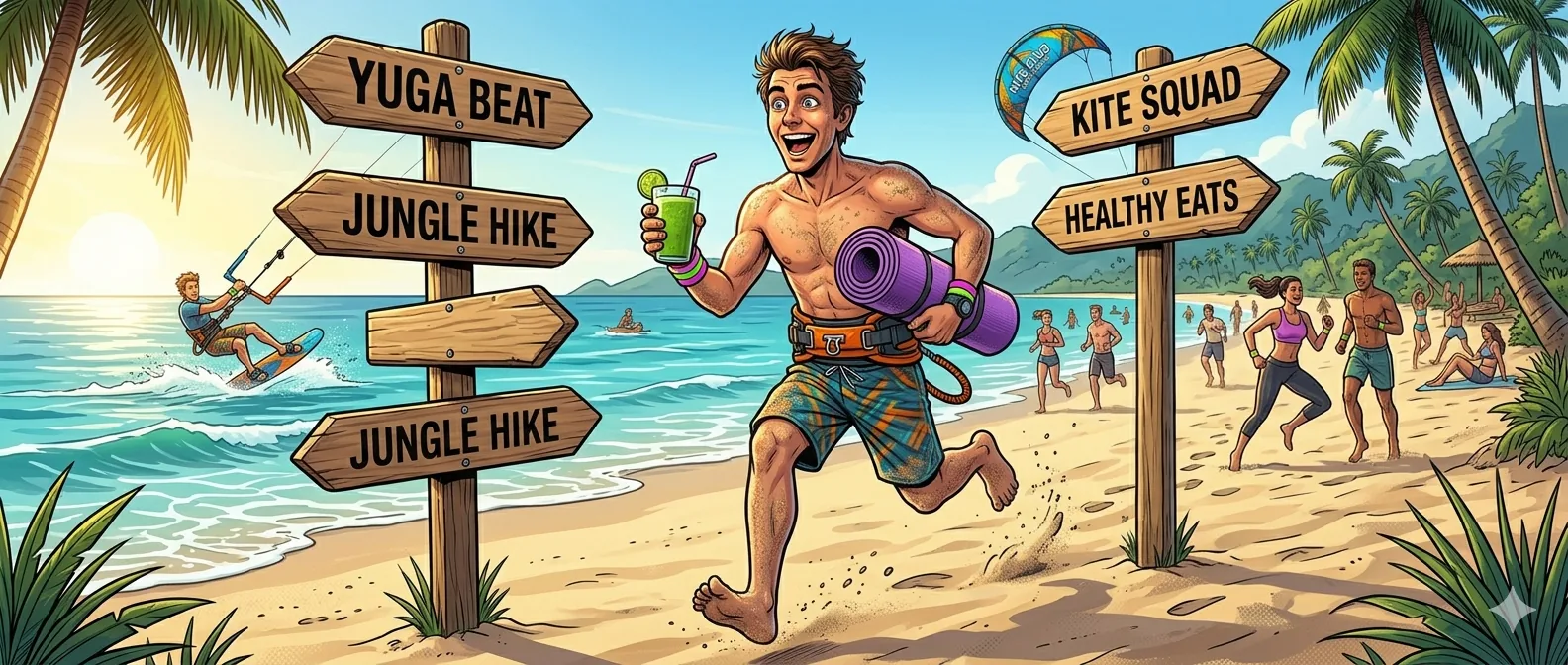
Koh Samui is one of Southeast Asia's best-known wellness destinations, with yoga studios, retreats and spas all over the island. For kite visitors, this offers genuine recovery benefits — not just relaxation, but the specific flexibility and body awareness that accelerate kitesurfing progression.
📖 7 min read · Updated May 2026 · By Sergei Sharvarok · Founder & Head Instructor
Why Yoga Helps Kitesurfing
Kitesurfing uses: hip flexors (water start position), thoracic extension (riding posture), shoulder stability (bar control), core anti-rotation (board edging). Yoga addresses all four. A regular yoga practice before and during your kite holiday improves water start position comfort, reduces lower back fatigue, and develops the body awareness that makes kite feel more intuitive.
The IKO instructor guide specifically recommends yoga as physical preparation for kitesurfing — not generically, but because the positions and balance demands of kite and yoga overlap significantly.
Yoga Studios on Koh Samui
Koh Samui has yoga studios and wellness retreats around the whole island, including in and around Lamai — handy during the December–April season when the school is at Lamai Beach. From May to October the school is at Nathon Beach on the west coast; most parts of the island are a short drive away.
- Morning drop-in classes (6–8 AM) — Available at several studios. Ideal before kite sessions — develop flexibility and focus before the day's lesson.
- Evening restorative yoga (5–7 PM) — After kite sessions. Restorative and yin yoga are specifically valuable for recovery — long holds release tension from forearms, lower back, and hip flexors.
- Yoga retreats — Full week or multiple-week programs with accommodation. Several retreat centers on Koh Samui combine yoga morning and evening with afternoon free time for kite sessions.
Active Recovery for Kite Visitors
After 3 hours of kiting in tropical heat, active recovery is more effective than complete rest. A 30–45 minute gentle yoga session in the late afternoon: reduces next-day soreness, maintains flexibility gained during the session, and improves sleep quality (important for motor learning consolidation).
Specific poses for kite recovery: pigeon pose (hip flexors and glutes after riding posture), dolphin pose (shoulder and upper back release), supported fish (thoracic extension release), legs-up-the-wall (blood flow from legs). None require prior yoga experience.
The combination of a kite morning session and a yoga evening session is one of the most productive daily routines we have seen students use. The evening yoga develops the hip and thoracic flexibility that makes the next morning's lesson feel noticeably easier — particularly in the water start position.
Combining a Kite and Yoga Retreat
Several visitors structure their Koh Samui trips as kite-yoga retreats: kite lesson 8:00–11:00 AM, lunch, beach rest or snorkel 12:00–4:00 PM, yoga 5–7 PM, dinner. This schedule is fully sustainable for 7–14 days and produces exceptional physical development progress.
The most common student feedback from those who combine kite and yoga: "I was sore on Day 3 but by Day 5 I felt better in the water than I ever have doing any sport." The combination accelerates body adaptation in a way that neither activity achieves alone.
Frequently Asked Questions
No — beginner classes are available at every major studio. Restorative and yin yoga classes (long-held gentle poses) are accessible without prior experience and are specifically valuable for recovery from kite sessions.
Drop-in classes: 250–500 THB per session. Monthly unlimited passes: 2,500–5,000 THB. Retreat programs (accommodation + yoga included): 5,000–20,000 THB per week depending on accommodation standard.
Yin yoga (long-held floor poses targeting fascia and flexibility) and Vinyasa flow (active strengthening) are the most beneficial combination. Avoid very intense Bikram or power yoga on kite lesson days — the fatigue compounds. Save intense yoga for rest days.
Yes — Thai massage shops are everywhere on Koh Samui, including in Lamai village and Nathon town. Traditional Thai massage (1 hour, 200–400 THB) is excellent for forearm, shoulder, and lower back recovery after sessions. Oil massage for 400–700 THB/hour is a good weekly recovery investment.
Combine Kite and Wellness at Koh Samui
IKO kite lessons in the morning. Yoga recovery in the evening. From 5,000 THB.
Book Now →Yoga and wellness for kitesurfing visitors at Koh Samui. Yoga studios around the island, recovery yoga for kite athletes, and combining kite lessons with yoga retreats. Contact Kite Club Koh Samui via WhatsApp +66 99 312 9042.