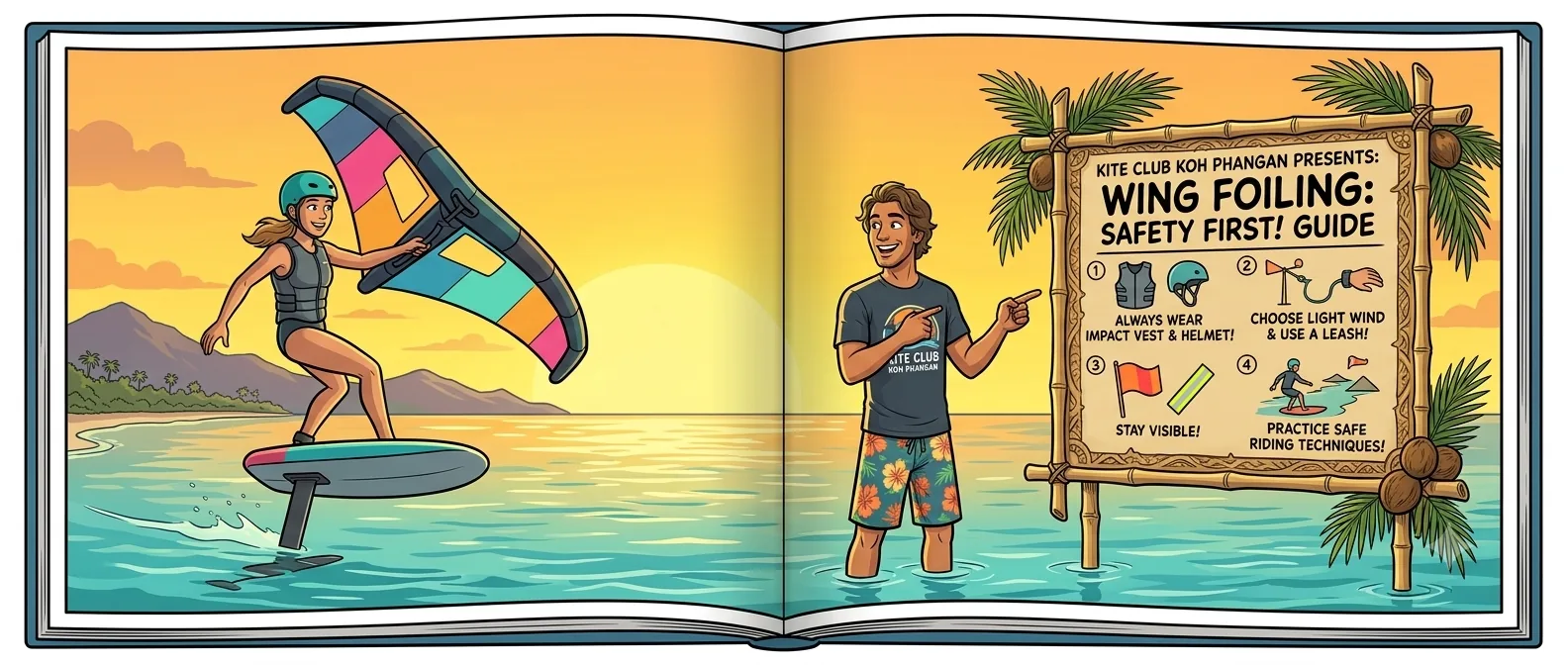
A wing foil setup has three main parts — the wing, the board and the foil — plus a few small items that matter more than they look. This guide explains what each piece does, how sizes are chosen and in which order it makes sense to buy.
📖 3 min read · Updated September 2026 · By Sergei Sharvarok · Founder & Head Instructor
The Wing
The wing is an inflatable, hand-held sail with a leading edge and a centre strut. You hold it by handles or a boom and power it up by pulling in with the back hand. Sizes are measured in square metres; lighter riders and stronger wind need smaller wings.
As a rule of thumb, wing size ≈ your weight in kg ÷ wind in knots × 1.1–1.2. A 75 kg rider in 15 knots usually rides about 5.5–6 m². Our wing foil calculator does the maths for you.
The Board
Board size is about volume. Beginners need a lot of it — roughly body weight plus 40–60 litres — so they can stand and balance before foiling. Experienced riders go smaller for a lighter, looser feel. Width gives stability at low speed; length helps the board glide and pump onto the foil.
The Foil
- Front wing — creates most of the lift. Big, slow front wings (about 1,800–2,500 cm² for learning) lift early and forgive mistakes; smaller ones are faster and turn tighter.
- Mast — connects the board to the foil. Shorter masts are easier to learn on; longer ones give more room in chop and waves.
- Fuselage — the body joining front wing and stabiliser. Its length affects how stable or lively the foil feels.
- Stabiliser — the small rear wing that keeps the foil balanced in pitch.
Safety Gear and Small Items
- Wing leash — attaches the wing to your wrist or waist so it does not blow away when you fall.
- Board leash — keeps the board close; a coiled leash avoids tangles.
- Helmet and impact vest — strongly recommended, because falls happen near a hard foil.
- Harness (optional) — some riders use a waist harness for longer sessions once they ride comfortably.
What to Buy First
Do not buy anything before you have tried a few different sizes. Equipment choices depend on your weight, your level and the local wind — and they change quickly in the first weeks. The usual order is: a wing in your most-used size, then a board that matches your level, then a foil. Many riders keep a big beginner board for light-wind days even after they move to a smaller one.
On Koh Samui you can learn on our gear in lessons and then rent a wing set (wing, foil board and mast) from 2,000 THB per hour once you ride independently — see rental prices.
Frequently Asked Questions
What wing foil equipment do I need?
A wing, a foil board and a foil (front wing, mast, fuselage and stabiliser), plus a wing leash, board leash, helmet and impact vest.
What size wing should a beginner use?
It depends on weight and wind. As a rule of thumb, divide your weight in kg by the wind speed in knots and multiply by about 1.2 for the first sessions.
Should I buy or rent wing foil gear?
Rent or take lessons first. Your ideal board and foil size change quickly as you learn, so buying too early often means buying twice.
Is equipment included in lessons?
Yes. All wing foil equipment is included in Kite Club lessons on Koh Samui.
Try Before You Buy
Learn on our equipment and find the sizes that suit you.
💬 WhatsApp +66 99 312 9042