Almost everyone learning to wing foil gets stuck on the same handful of problems. The good news: none of them is about talent. Each one has a simple fix, and knowing them in advance can save you several frustrating sessions.
📖 3 min read · Updated September 2026 · By Sergei Sharvarok · Founder & Head Instructor
1. Moving to a Small Board Too Early
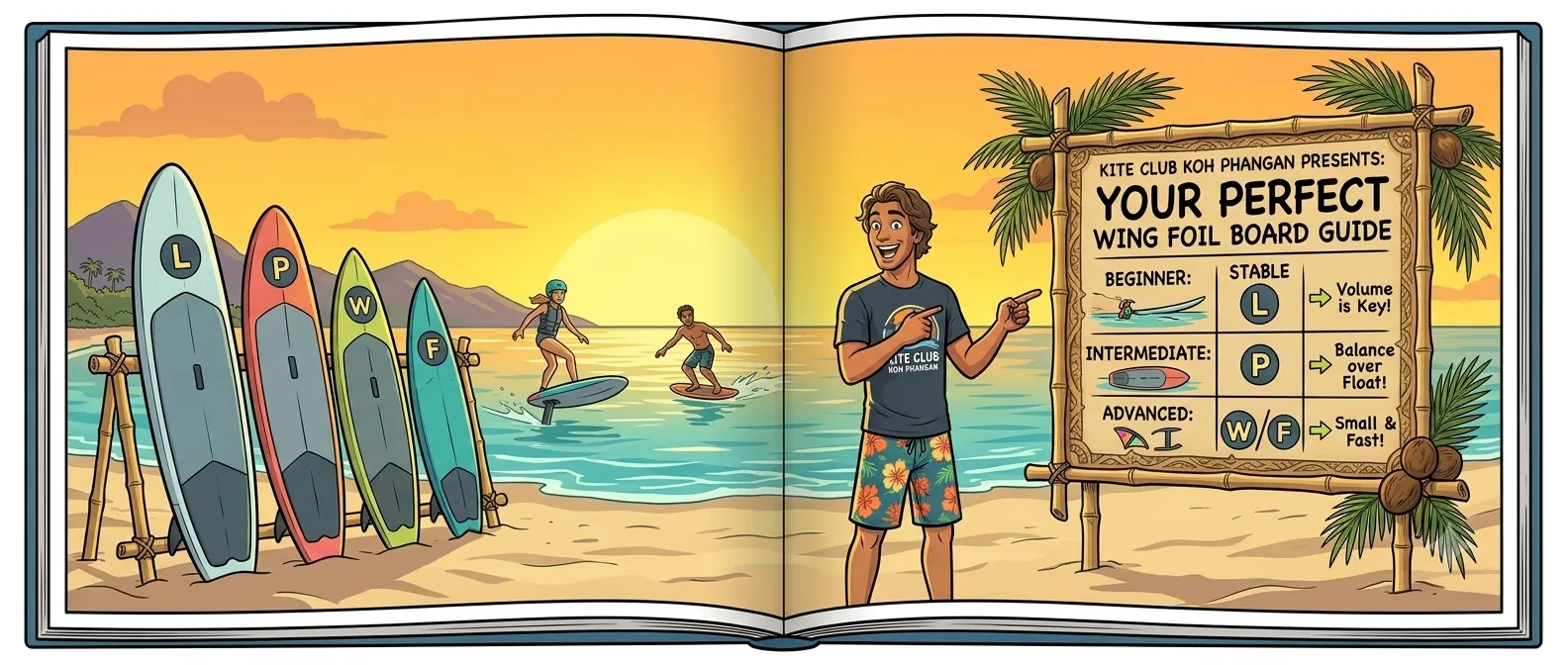
A small board looks fast and feels exciting, but while you are still learning to get up on the foil it mostly means swimming. Extra volume lets you stand, balance and pump before take-off. Stay on a board with roughly your body weight plus 40–60 litres until you foil reliably — our wing foil size calculator gives a starting range.
The fix: step down gradually, 15–30 litres at a time, only once take-offs become routine.
2. Looking at Your Feet
The board goes where your eyes go. Staring down at the deck shifts your weight forward and the nose drops just as the foil is about to lift.
The fix: pick a point on the horizon in your direction of travel and keep your head up, especially during the pump before take-off.
3. Pumping With Your Arms Only
Beginners often try to create speed by flapping the wing with their arms. That burns energy and moves the wing in the wrong direction.
The fix: generate the pump from your legs and hips — small, rhythmic up-and-down movements of the board — and use the wing for a steady, powerful pull, not a frantic flap.
4. Holding the Wing at the Wrong Angle
A wing held too high or too upright catches the wind badly and pulls you off balance; a wing sheeted out at the wrong moment leaves you without power just when you need it.
The fix: keep the leading edge angled slightly forward, arms relaxed and a little bent, and sheet in smoothly with the back hand to add power. Practise this on land before you go on the water.
5. Learning in the Wrong Conditions
Strong, gusty wind and choppy water turn every session into a fight. Very light wind means you never get enough speed to lift.
The fix: learn in steady, moderate wind on flat water. On Koh Samui that means Nahai Beach between December and April — shallow, flat water and a typical 12–20 knots, most consistent from January to March.
Most of these mistakes are invisible to the rider and obvious to someone on the beach. A short lesson with feedback in real time usually fixes in an hour what takes a week of trial and error alone.
Learning With Kite Club
Our IWO wing foil lessons run from a 2-hour intro (5,000 THB) to the beginner course (14,000 THB, 6 hours) and the advanced course (20,000 THB, 10 hours). All equipment is included, and the instructor adjusts board, foil and wing size as you progress.
Frequently Asked Questions
What is the most common wing foil mistake?
Moving to a board that is too small before take-offs are reliable. Extra volume makes learning much faster.
Why can I not get up on the foil?
Usually not enough speed: pump with your legs, keep your eyes up and keep the wing powered with a steady pull. A bigger board or front foil also helps.
How long does it take to learn wing foiling?
Most people foil for the first time within a few sessions. Our beginner course is 6 hours over three 2-hour lessons.
What wind is best for learning to wing?
Steady, moderate wind on flat water. At Nahai Beach on Koh Samui the typical December–April wind is 12–20 knots.
Skip the Trial and Error
Book a 2-hour wing foil intro and get real-time feedback from your instructor.
💬 WhatsApp +66 99 312 9042